Tuesday, September 18, 2012

World Press Photo 2012

 
People living in a city are very fortunate because the city offers multiple benefits in retrospect to economy, food, freedom of speech, etc. Furthermore, some people are ignorant of the contemporary issues and daily life of other nations around the world. Some of these important matters are not even confronted by television newscasters because they are too “graphic to show” or too “taboo”. Fortunately, I am proud to know that a non-profit organization promoting photojournalism has established an annual exhibit in Montreal, the World Press Photo.  
This fall at the Bonsecours Market, the exhibition highlights prizewinning photographs of diverse subjects from photographers all over the world. These photographs offer more insight on matters that are poorly discussed. This year’s photographs illustrate the horrible aftermaths brought by the earthquake and the tsunami that struck Japan last year. There are also a multitude of snapshots from the student strikes that occurred earlier this year in Montreal. Of course, other controversial subjects are presented through photographs in the exhibition: some of them include animal cruelty, sports, child brides, bombings in Kabul and the 2012 mass protest in Egypt against the president Hosni Mubarak.

In conclusion, the World Press Photo exhibit is a news broadcast in stills that will definitely be an eye-opener for many.

For more information: http://www.worldpressphoto.org

Chill and don't freak out.

Every action has an equal and opposite reaction. So when cities get huge, it is not only the land that changes, but also the mind of its inhabitants.

Photo: Garry McLeod; Alamy; Yva Momatiuk & John Eastcott/Getty
The article I'm introducing is called "Apocalypse Not: Here’s Why You Shouldn’t Worry About End Times" by Matt Ridley, featured in Wired Magazine. The topic of the article is how society has predicted its end in numerous and distinct ways, through Chemicals, Pollution, Disease and Overpopulation. What needs to be noted is that in most cases, none of the predicted events (No more oil and gas by 1970) occurred or came close. 

I believe the reason that such events won't happen is that we, humans, underestimate ourselves. For example, take Steven King's The Stand, in which a super flu wipes out 99.4% of the world (it's always 99%). Mind you, the novel was originally written in 1978, when diseases such as AIDS were surfacing, but thanks to safe(r) practices, diseases are having a harder and harder time to spread with water filtration or antibacterial wipes, and science tis figuring out how to fight diseases.

There is also gas shortage. To say it simply: innovation. Technology is improving to not only make cars or devices more fuel efficient, but also to find new sources of energy. We are making cars that can run on gas AND electricity and I dream of a world when Cars will not need gas.

To read the article, follow the link below or buy the magazine in stores. (In this month's edition, there's also an article on the internet phenomena of cats.)

.http://www.wired.com/wiredscience/2012/08/ff_apocalypsenot/all/

A Natural Oasis in the Heart of Montreal


Montreal is one of the many active and cacophonous cities around the world. However, a place of escape from that busy life lies at the heart of the city and that is the Botanical Garden.  Seasonally, the Botanical Garden is filled with breathtaking gardens, ranging from a native to a Chinese theme.

Every fall, the Chinese garden highlights its captivating event, which is the Magic of Lanterns.  This latter offers a wonderful sight of colourful lanterns depicting multiple stories from ancient historical facts of China.  

Just a few walks away, the Alpine garden provides rocky paths and a beautiful waterfall for Alpine enthusiasts to enjoy.  

Further ahead, the native garden evokes the environmental lifestyle of the eleven First Nations of Quebec: replicas of the remnants of ancient camps contribute to the old native ambiance.


Finally, it would be an excellent idea to end the tour with the Japanese garden. People can walk through it with a feeling of serene tranquility. Furthermore, people can expect to be transported to a part of Japan’s rural area, with its fish pond and its traditional Japanese house. 

 All in all, the Botanical garden is a natural oasis for those who wish to be “one with nature” in four different types of environment that are surprisingly accessible inside a city.       


Wednesday, September 5, 2012

The World in which we Live

Welcome to Fall 2012.


Here are some of the current concerns shared by the class:

political instability
the environment/pollution
Pauline Marois
infrastructure, in particular roads and bridges...
schools and classrooms: education
opportunity
our economy
our hockey team
arts and culture
public transportation
language conflicts
and more.

Wednesday, December 7, 2011

“Tis the season”

As the holiday approach, stress levels arise and Montrealers don’t know how cope with all of this. In addition to the holiday stress, construction around the city is unbearable. Blocked streets and detour route commuters around the city, although these repairs need to be completed, taking a longer way to your destination is frustrating. For people taking their car into the city finding free parking or a reasonably priced parking meter is nearly impossible. In addition during the winter seasons there is a snow removal hour which Montreals need to worry about. All in all Montreal is a very festive city around the holidays however does come with a price with heavy construction and no parking.

Victor Mancini

Monday, December 5, 2011

Montreal makes NYT list of "hip" cities | Daily Brew - Yahoo! News

Montreal makes NYT list of "hip" cities | Daily Brew - Yahoo! News

The Underground City and Recycling


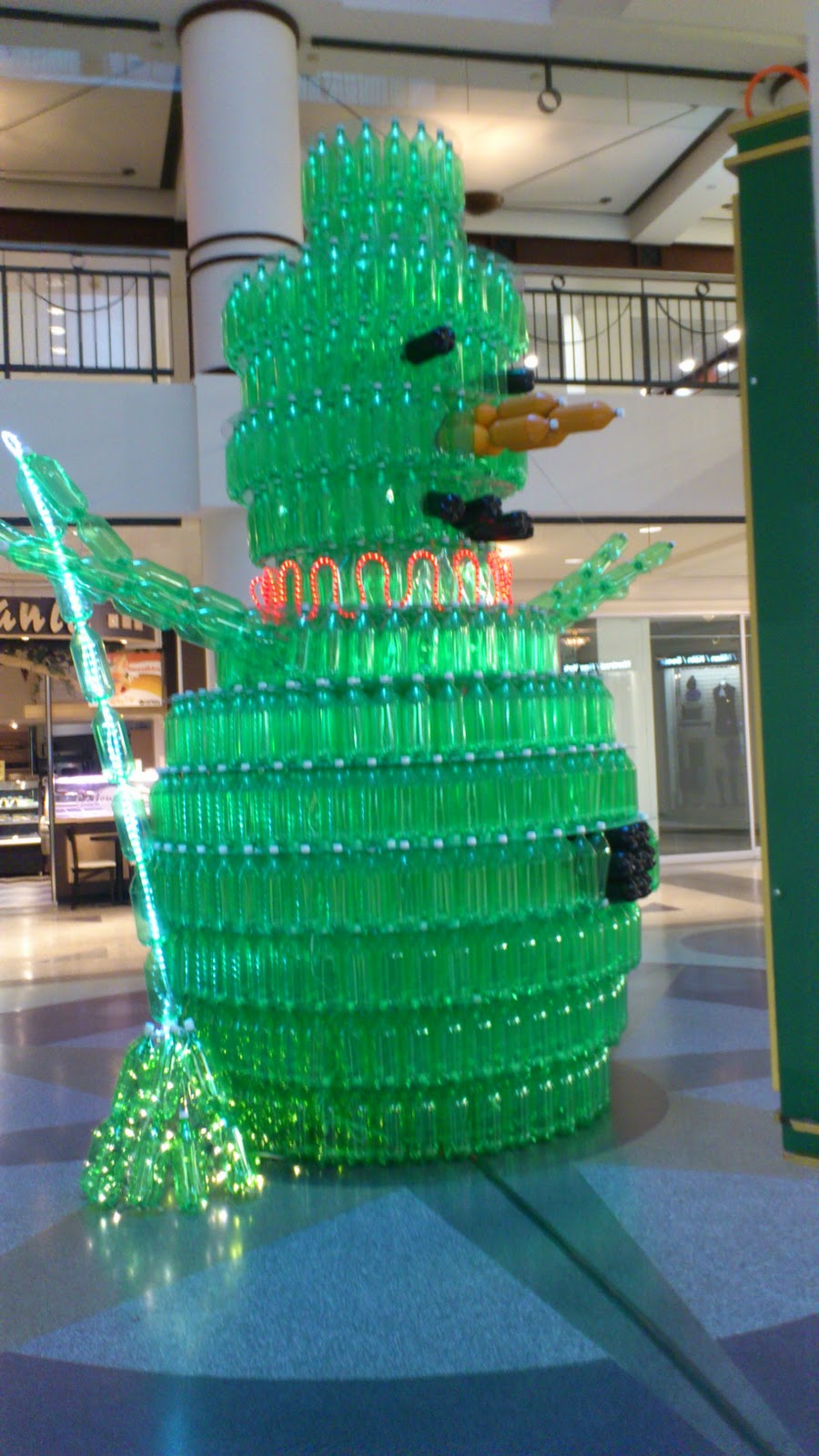
The underground city of Montreal is used by many people who are commuting to, from and through various places. This display of art  is made of re-used carton boxes and recyled paper, and is located in the Eaton Center mall, right by the St. Catherine Street exit. Since the Eaton Centre is one of the most popular underground malls in Canada, it can be used as a platform to convey global and social messages about the environment. Materials, such as water bottles, cardboard, and recycled paper are collected and made into beautiful art that is put on display for millions to see.

The recycled art is seen by many people who shop, or who simply use the exit to get to the metro. This snowman is made of green, orange, and brown re-used bottles and is located in Les Cours Mont-Royal, right by Peel Metro. In addition, this kind of recycled art is put up throughout other connecting malls, such as Les Cours Mont-Royal.

This tree is made of recycled bottles and is in Les Cours Mont-Royal:


 Text and photos by Sabrina Principe